Feed
All posts
Everything I've shared across social networks — page 3.
LinkedIn
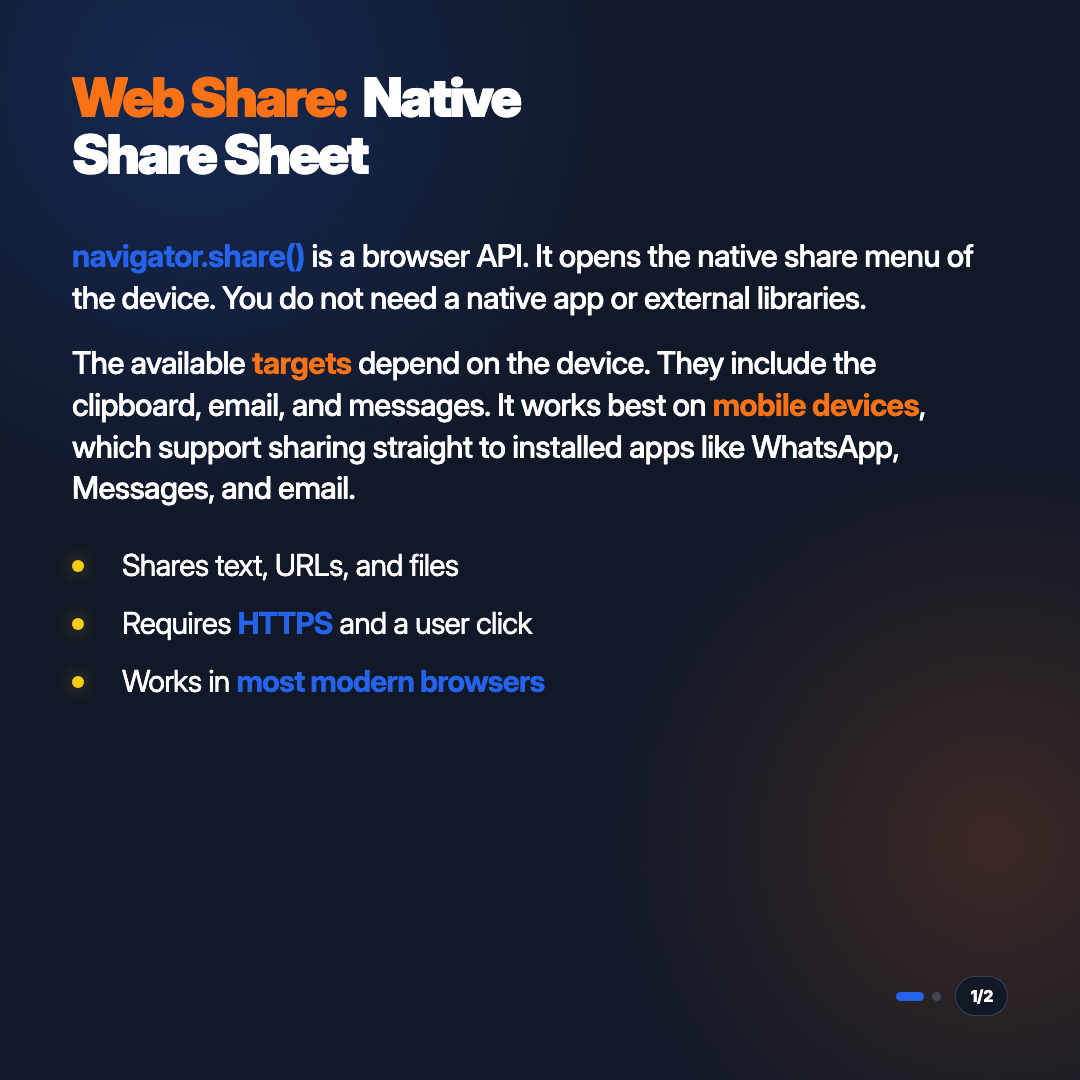
Web apps can now open the native share menu on mobile devices. This usually means wrapping it in a native app, but the browser already has this built in. You can use the Web Share API to let people share links to WhatsA…
Read more →LinkedIn
This is the kind of smart CSS that also makes the experience better the small interaction details I love giving users. The trick is clamp() doing the heavy lifting keeping the radius in bounds while it adapts and most pe…
Read more →LinkedIn
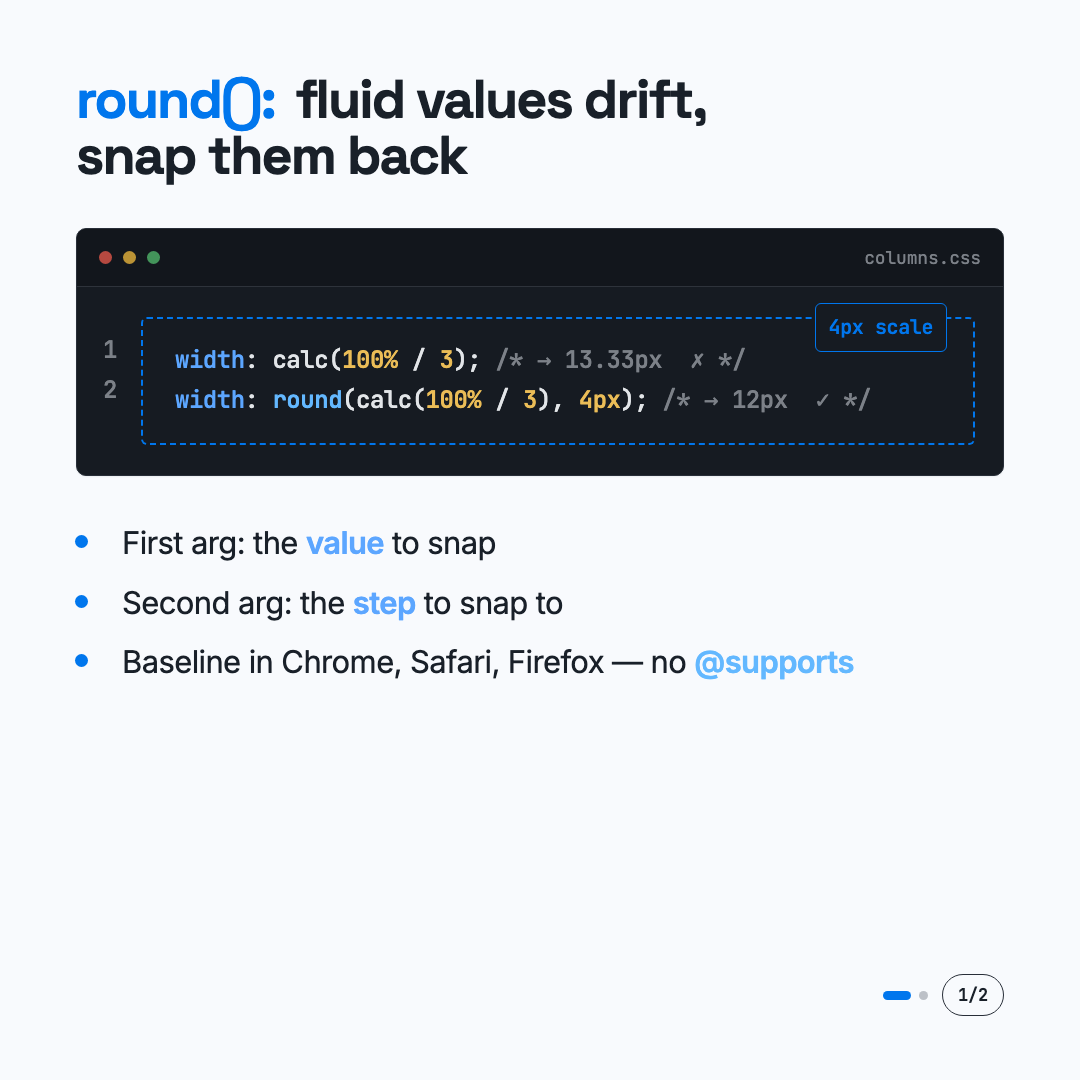
A pixel-perfect design system on a 4px scale breaks when a fluid column computes to 13.33px. Product and design teams complain about exactly this, spacing looks off and shifts across viewports. What would be a good way …
Read more →LinkedIn
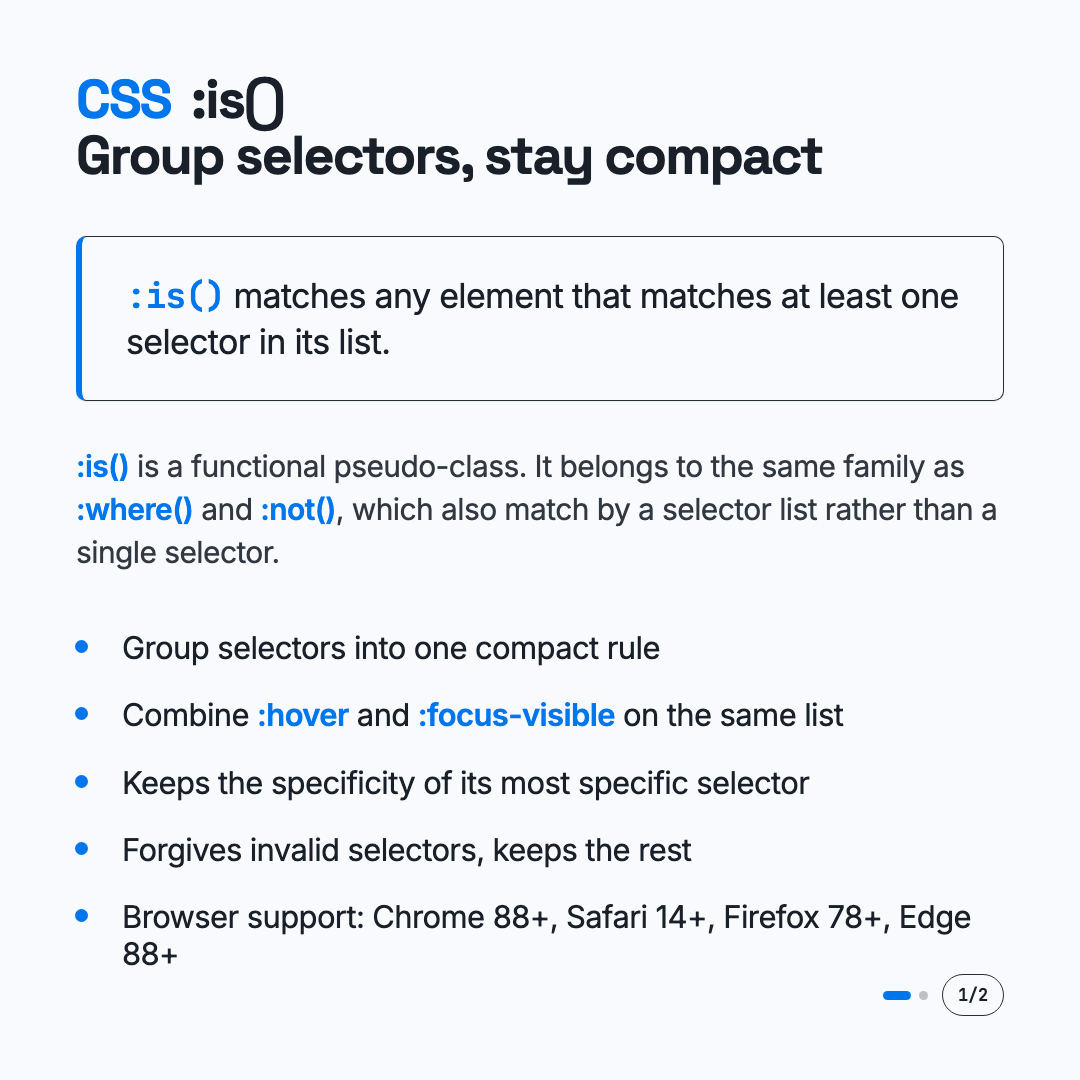
CSS :is() quietly amuses me. Group selectors in one rule and stop repeating the same list for :hover and :focus-visible. Think about shared behavior first and name the elements, then add the states. It shifts how I plan…
Read more →LinkedIn
Even as a front-end developer, these points are required knowledge. This is the bread and butter for full stack development. If you are a backend developer, you should make these recommendations when a project fails to …
Read more →LinkedIn
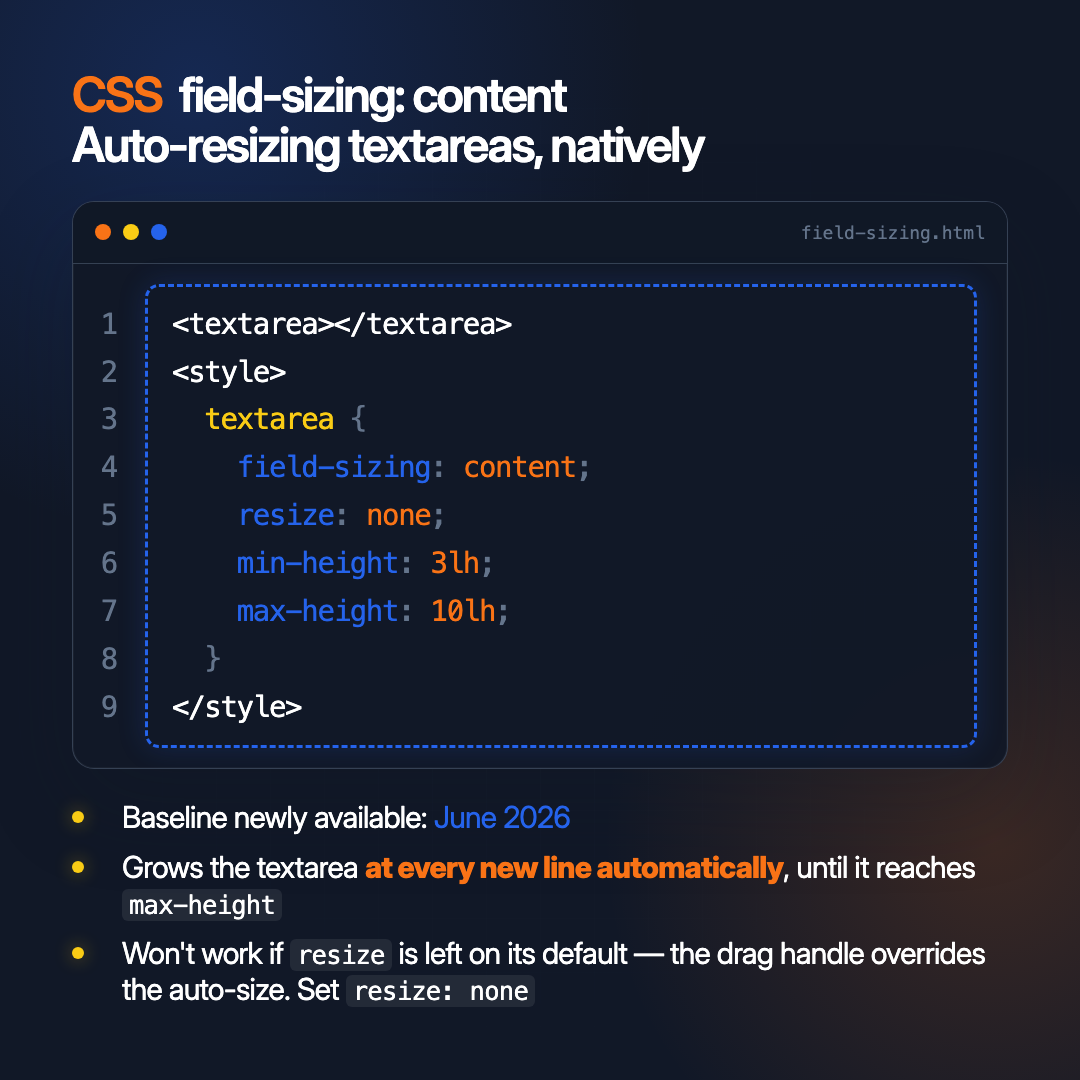
Another JavaScript workaround I don't need to worry about anymore. Textareas finally grow to fit their content with one CSS declaration. I can stop installing a framework package or writing a scrollHeight loop for a nat…
Read more →LinkedIn
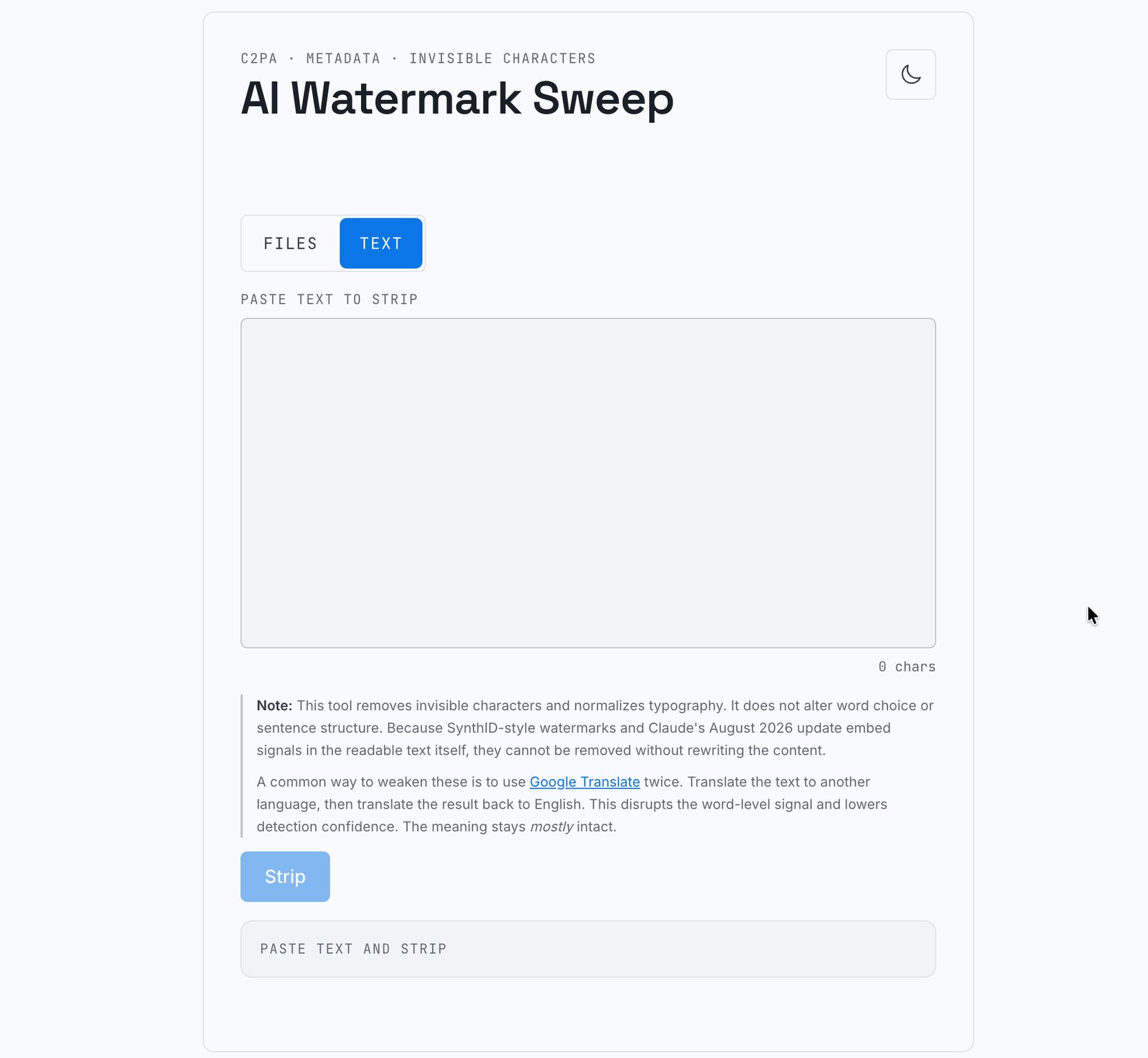
I spent the last few weeks researching how to detect AI-generated content and specifically, how watermarking systems work for images and text. …
Read more →LinkedIn
You know when you just know a library will improve the user experience? https://lnkd.in/d7PGSdha morphicons is one of those. It animates any stroke SVG icon into another using spring physics and optimal rotation, no ad…
Read more →LinkedIn
Reading code resembles solving a puzzle more than reading an ordinary sentence. It trains a repeatable way to dismantle complexity. Over the years, I learned to break large problems into smaller, executable steps. That …
Read more →LinkedIn
This is one of those features I didn’t know I wanted so much. One of the hardest parts of larger tasks is breaking the work into smaller PRs that are easy to review and integrate. Sometimes a change touches dozens of fi…
Read more →LinkedIn
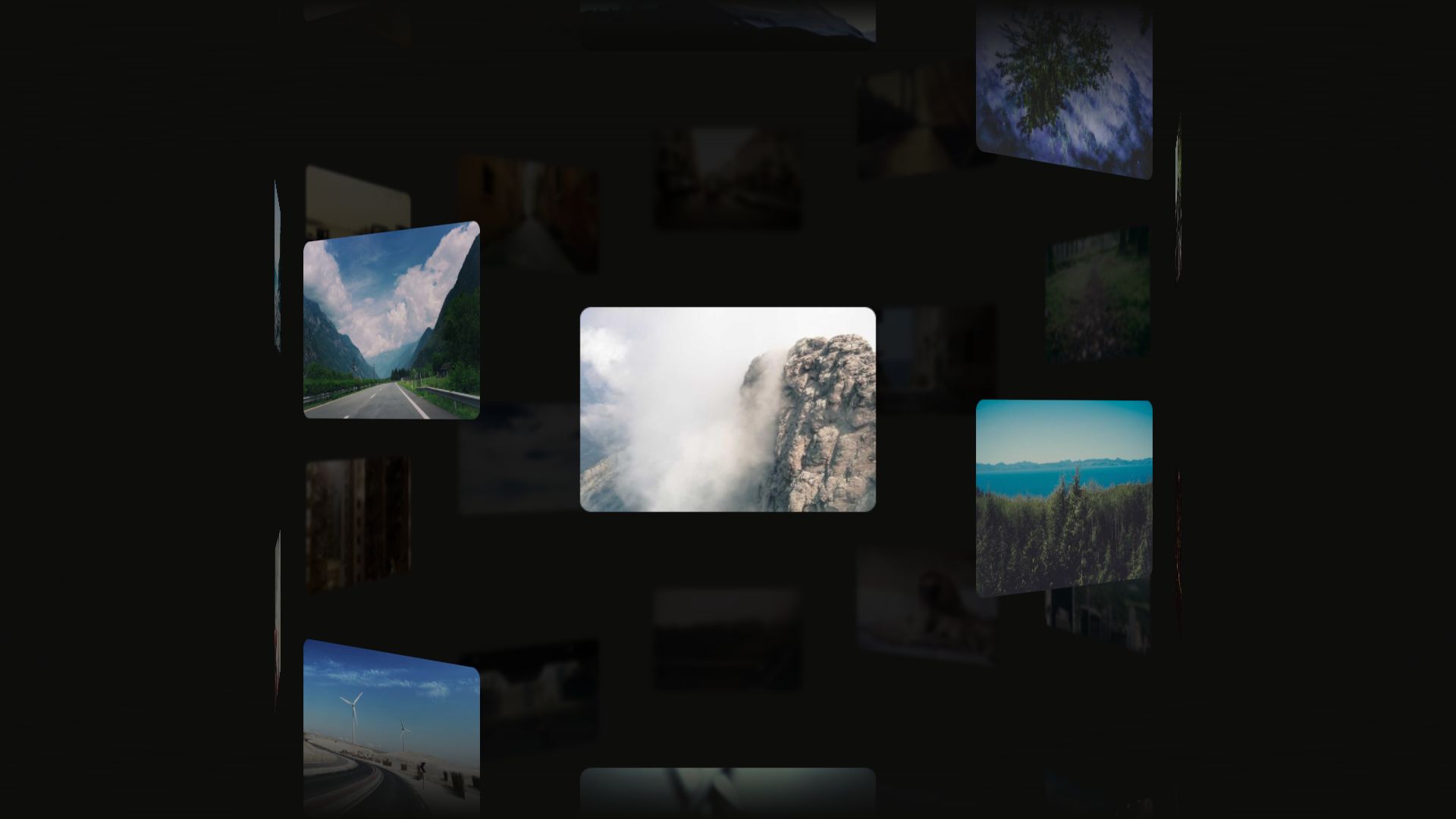
I spent the past few days on a new lab experiment, challenging myself to build a 3D image gallery in the browser 🤯. It is shaped like a DNA double helix, with two strands of images spiraling around each other. I wa…
Read more →LinkedIn
Well, with calc, @function, and if() in CSS, you can do pretty much anything. Someone built a working x86 processor, the kind of chip that powered early PCs, using nothing but CSS. No JavaScript, no plugins. A real C pr…
Read more →LinkedIn
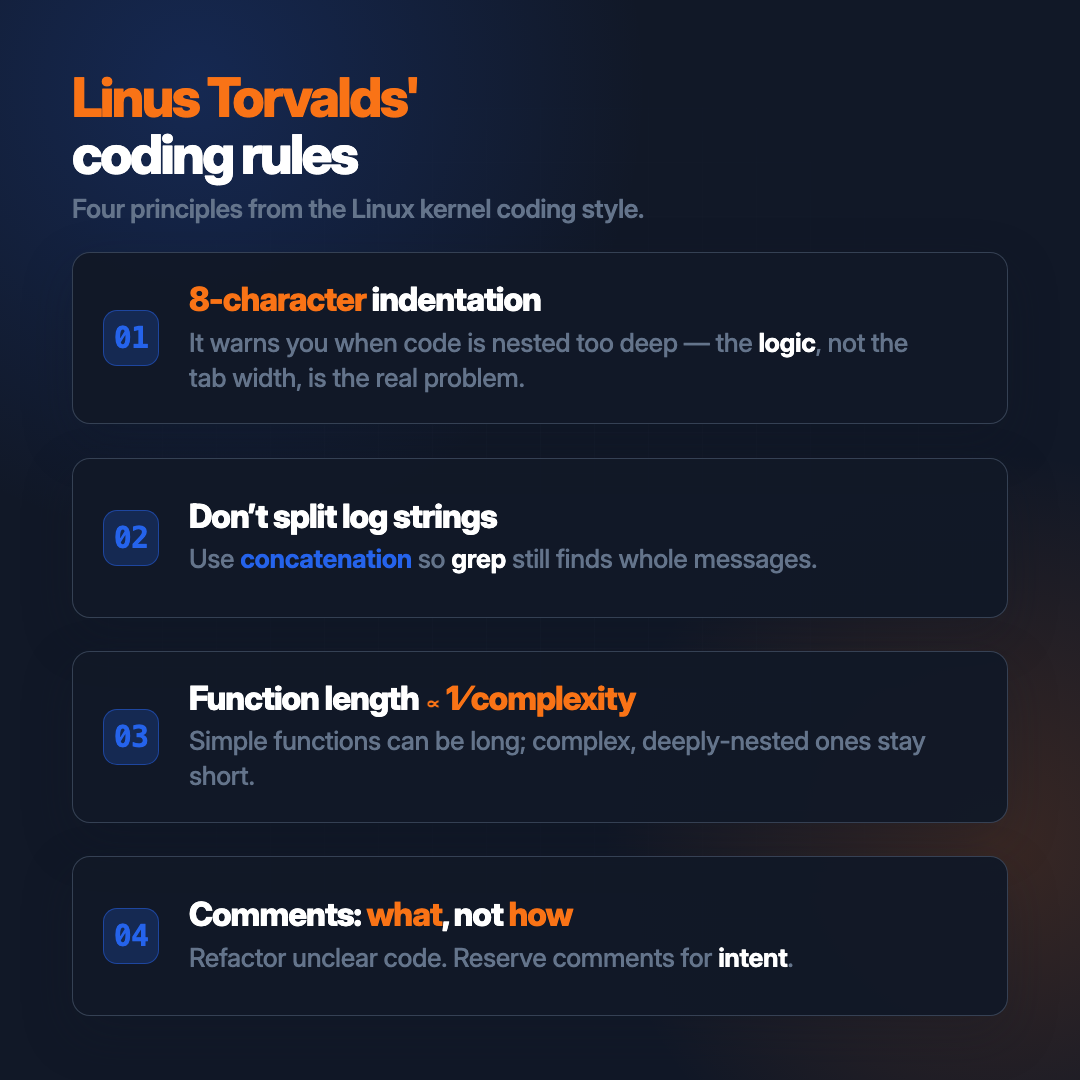
There was a time when readable code meant following small, deliberate constraints. You spaced for clarity, kept functions short when complexity grew, and commented intent instead of mechanics. AI tools now push for maxim…
Read more →LinkedIn
I’ve spent nine years working with Vue across different teams and codebases, learning from developers whose insightful conversations about conventions shaped my experience across the projects I worked on. That experienc…
Read more →LinkedIn
Apple's Liquid Glass effect from WWDC 2025, recreated with CSS and SVG. No WebGL and, no libraries, just SVG displacement maps, Snell's law, and some clever gradient math 🤯 That's the kind of interaction design I res…
Read more →LinkedIn
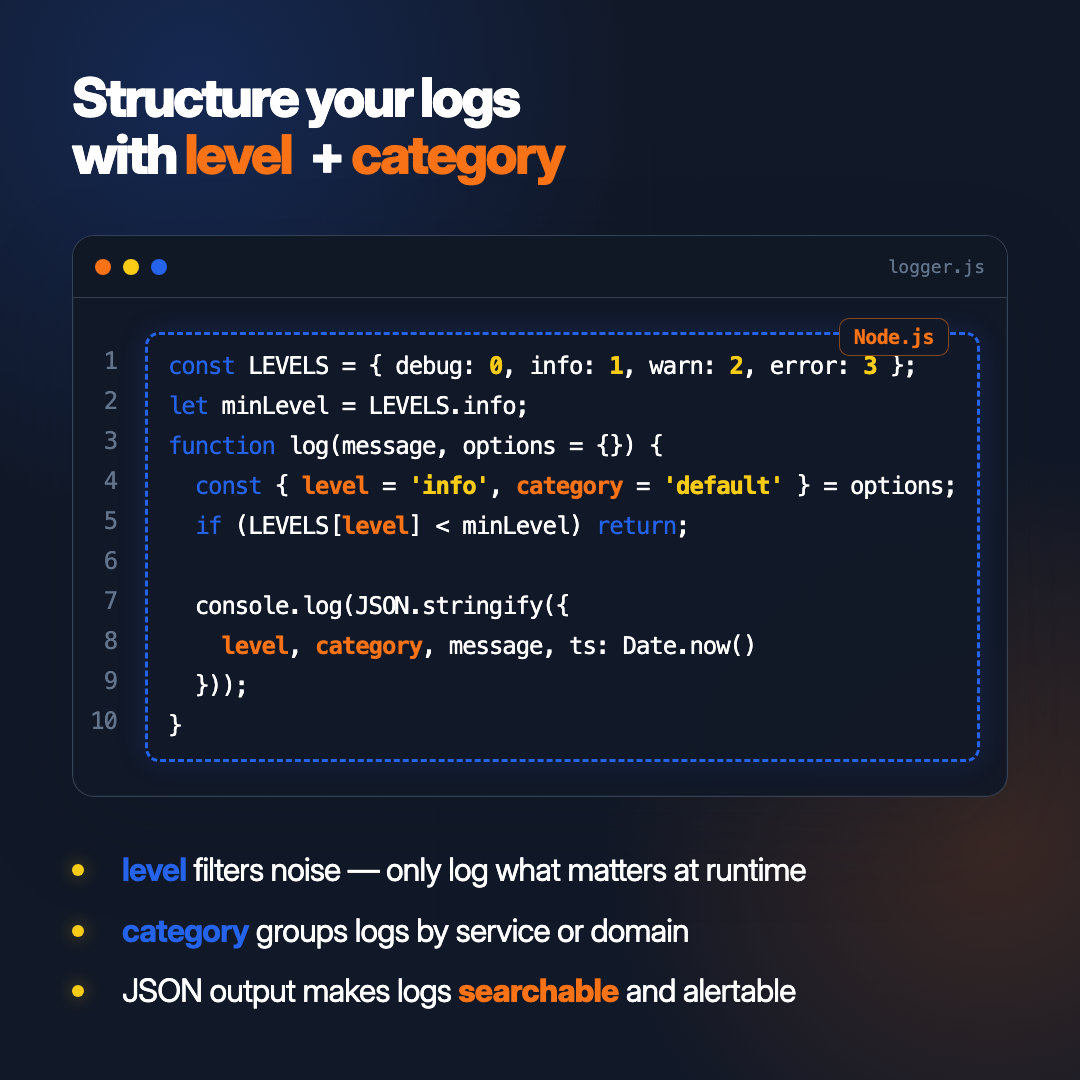
Observability starts with knowing the difference between a warning and a real error. BetterStack keeps putting out content on the topics developers actually need to get right. Structured JSON output makes debugging far …
Read more →LinkedIn
I just watched Kevin Powell's latest video on CSS offset-path, and it's a great reminder of how much animation power we have in plain CSS now. The property lets you move elements along a path, and you don't even need SVG…
Read more →LinkedIn
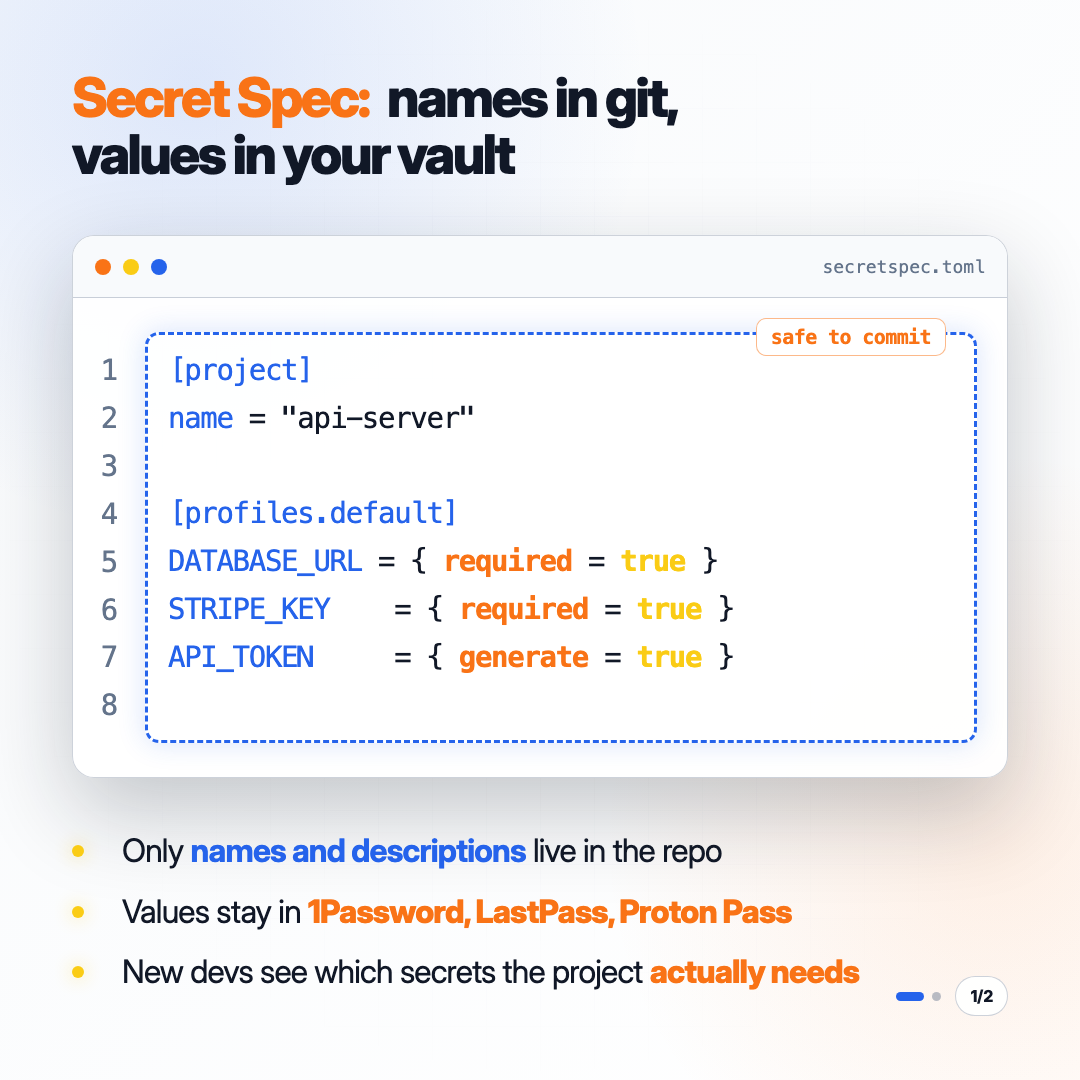
.env files work fine for quick projects and MVPs, but once a codebase grows and several people are touching it, syncing secrets and avoiding accidental leaks becomes real friction. Someone commits a real key by mistake, …
Read more →LinkedIn
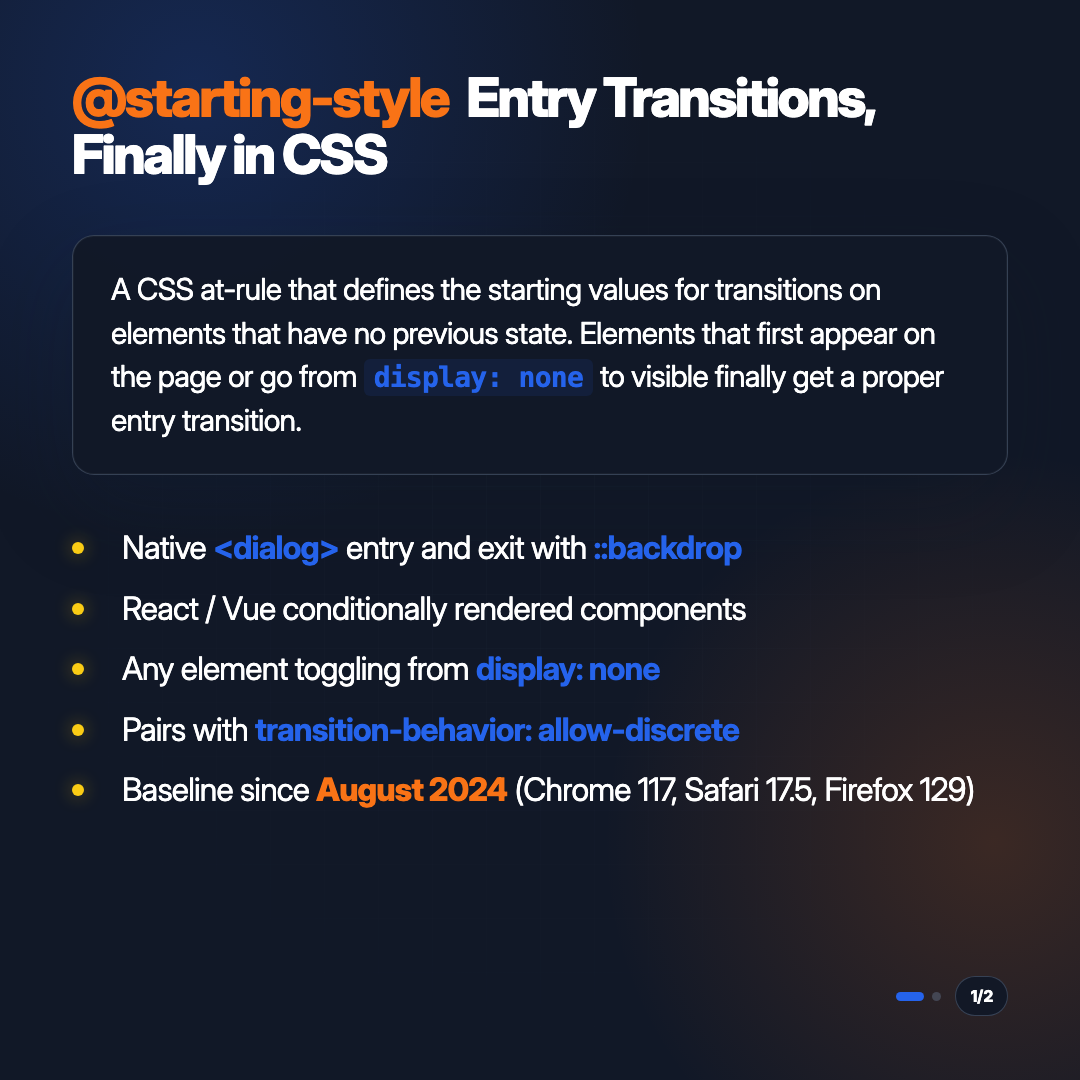
How many times did you wrestle with display: none just to make a component fade in? You change the opacity, set it to block, wait for a frame, toggle the opacity again, and still the transition doesn't fire. It's none of…
Read more →LinkedIn
Cache management in large frontend apps is one of those problems that feels simple until it isn't. You start with one or two data sources, then comes the third API, then a form that needs to update in real-time, then som…
Read more →